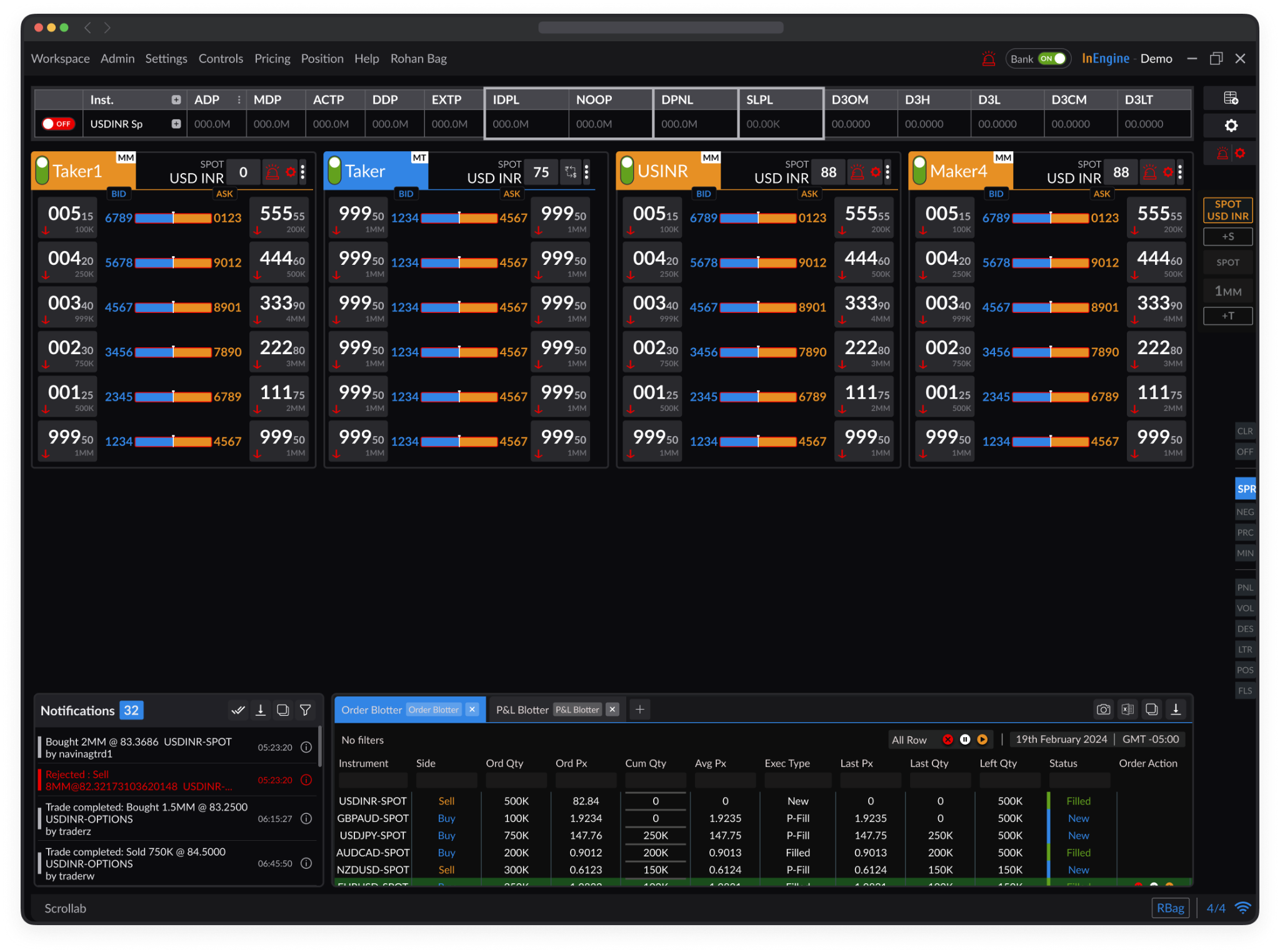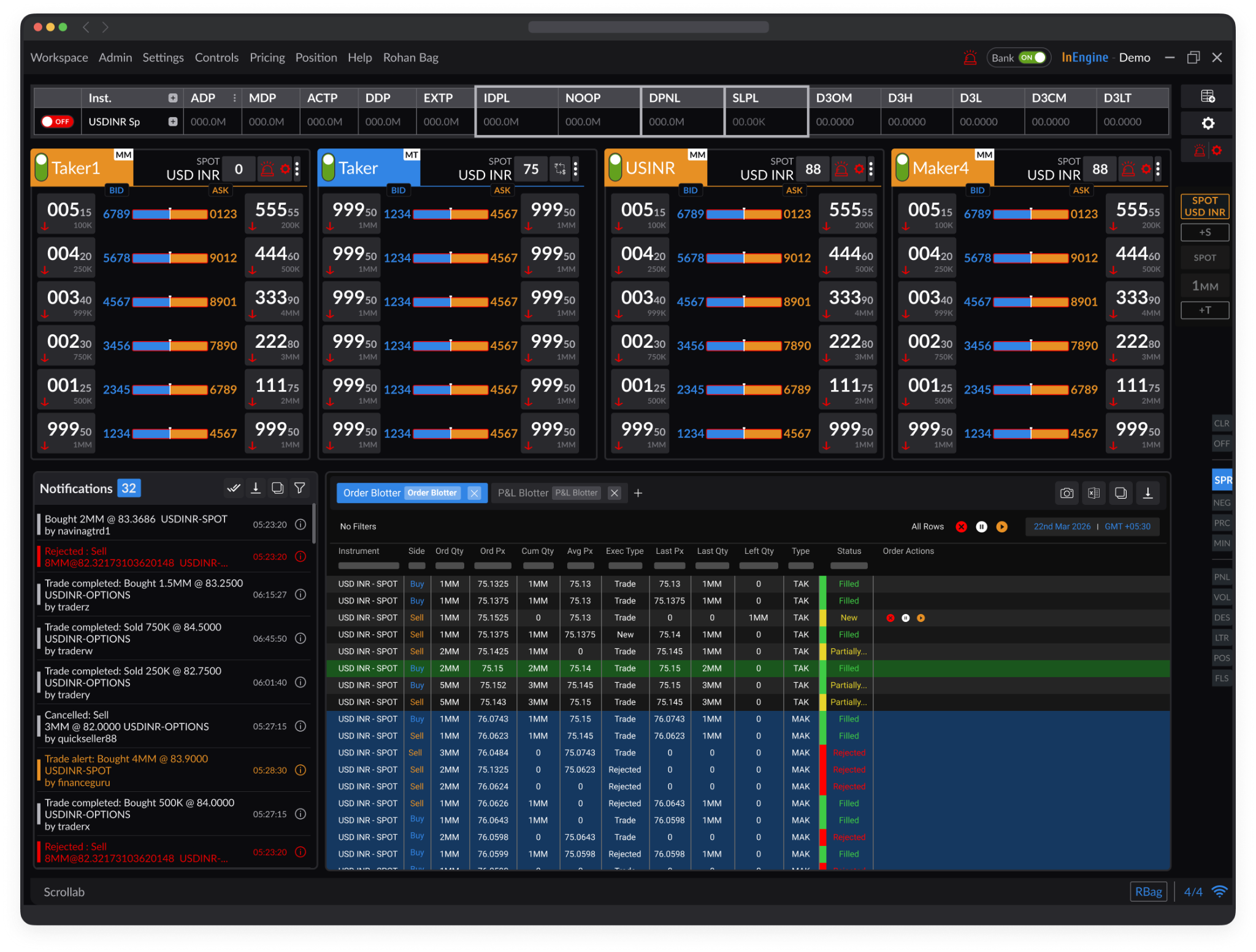
Real-time trading workspace
High-density layout designed for expert users
This case study includes confidential enterprise trading workflows and is shared for hiring review only.
Password is on my resume.
InEngine supports professional FX trading and bank operations. My work focused on cleaning up dense workflows, strengthening state visibility, and creating reusable patterns without disrupting expert users.
The product already supported complex trading and configuration workflows. The issue was not “too much information.” The issue was inconsistent hierarchy, unclear states, and repeated patterns behaving differently across modules.
Critical data competed with secondary actions.
Similar edit, save, and publish flows behaved differently.
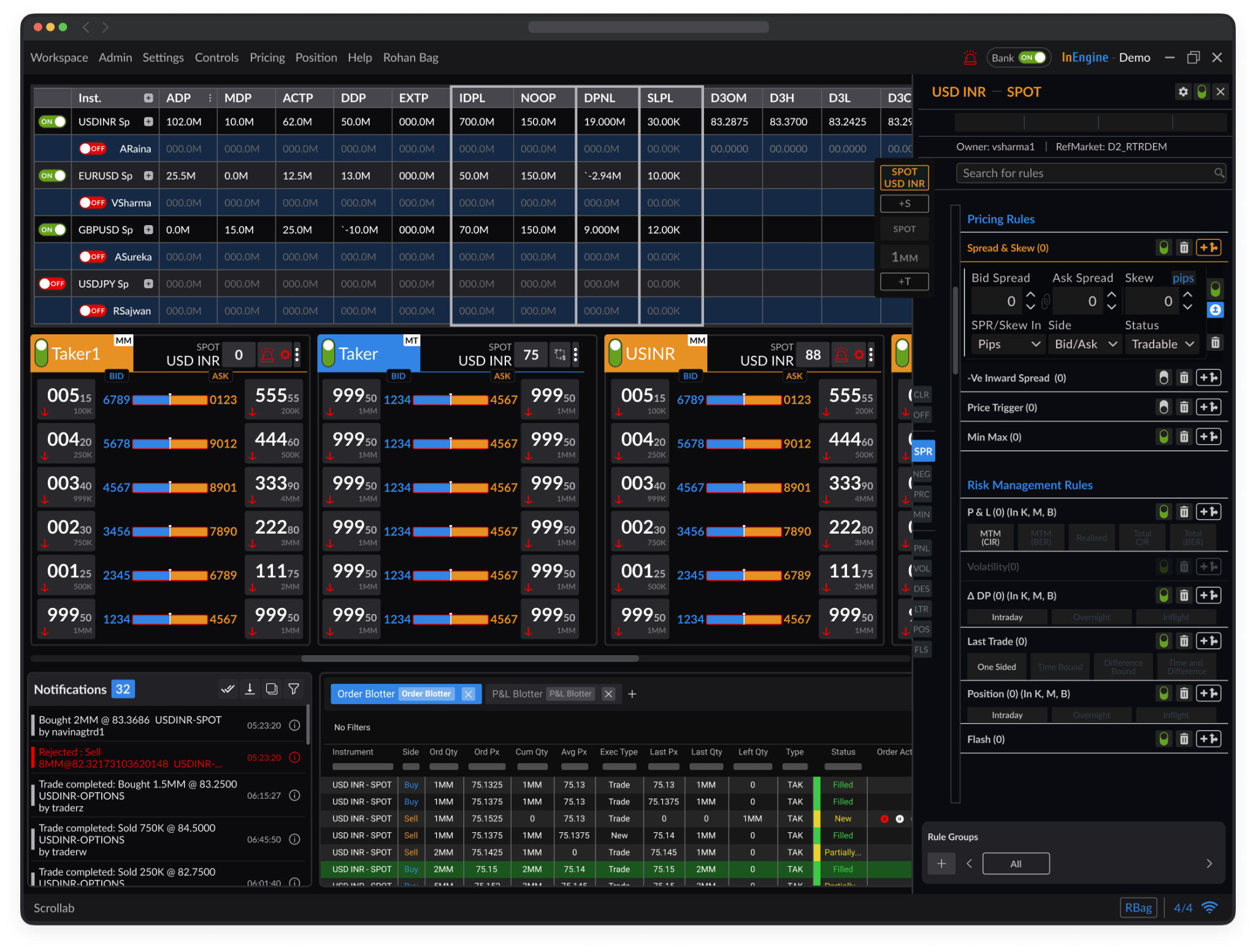
Rules, access, and editable states needed stronger visual distinction.
For expert trading tools, minimalism can become a liability. The design direction focused on scanability, predictable actions, reusable states, and fewer surprises.
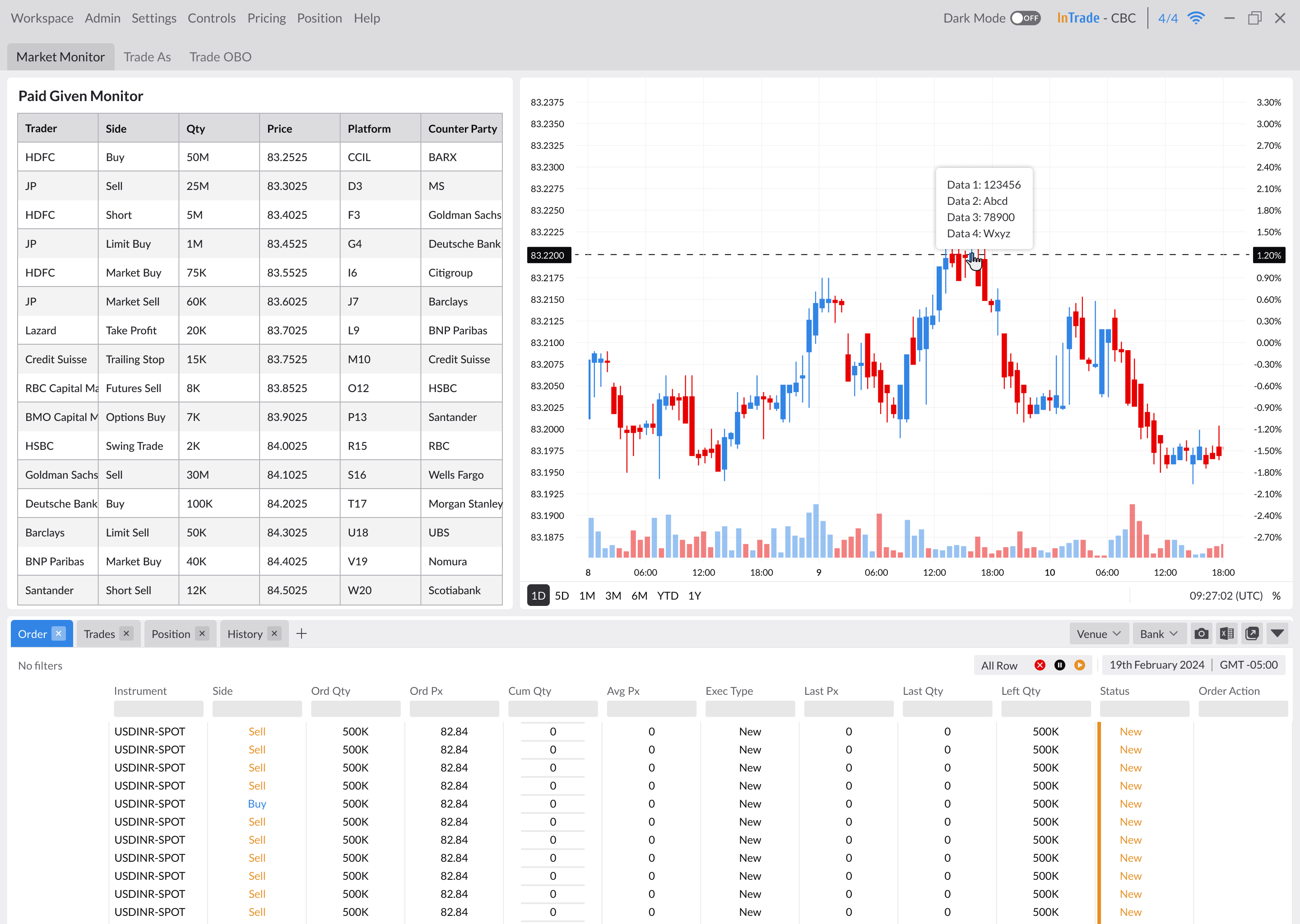
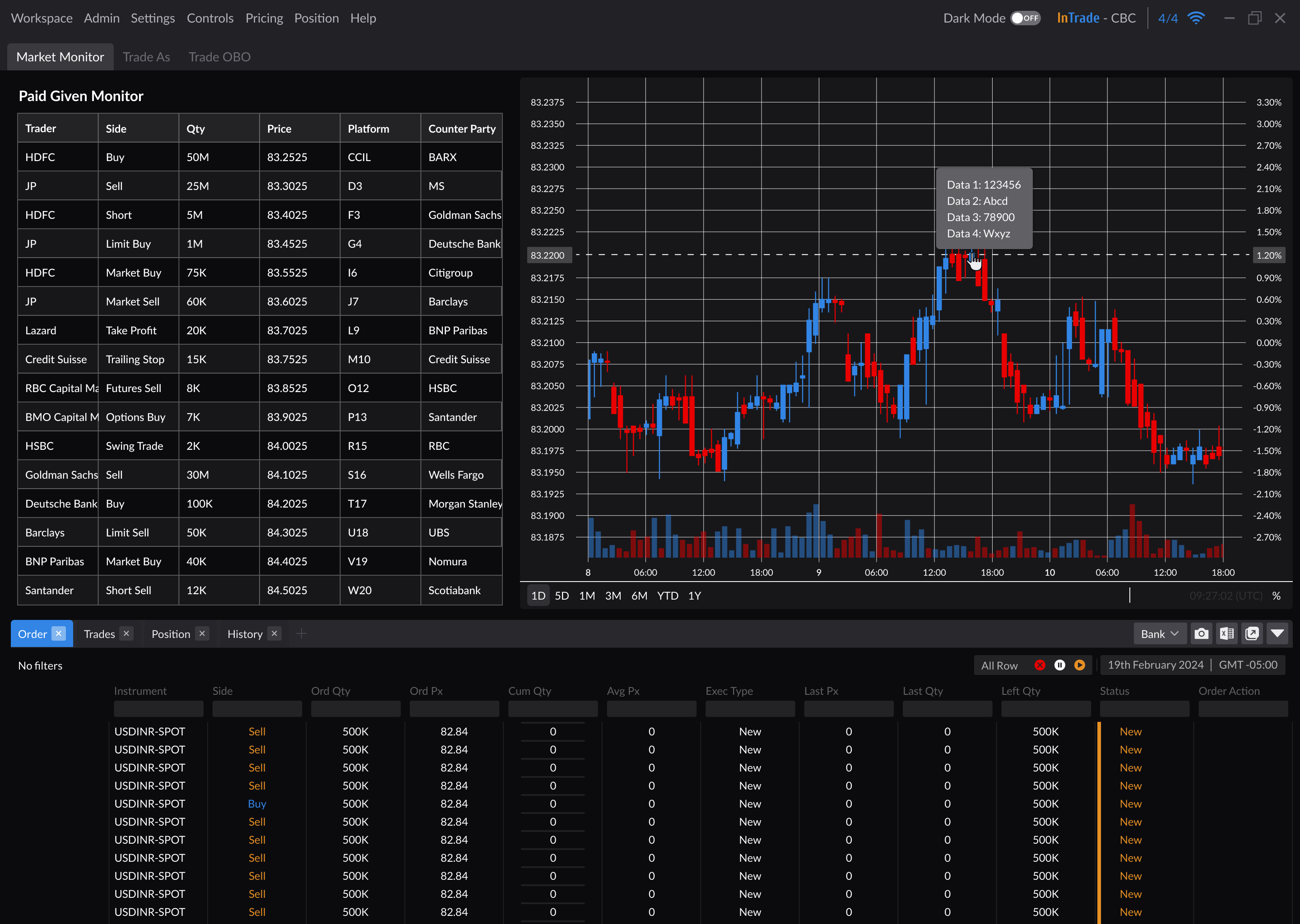
The same dense table structure works across light dashboards and darker trading-floor setups.
Aggregated buy/sell pressure by price level, helping traders read liquidity clusters at a glance.
Actions like edit, save, review, and publish were not consistent across trading and admin modules.
Similar workflows used consistent modal behavior, action placement, and state feedback.
Active, disabled, expanded, and locked states were not visually distinct enough.
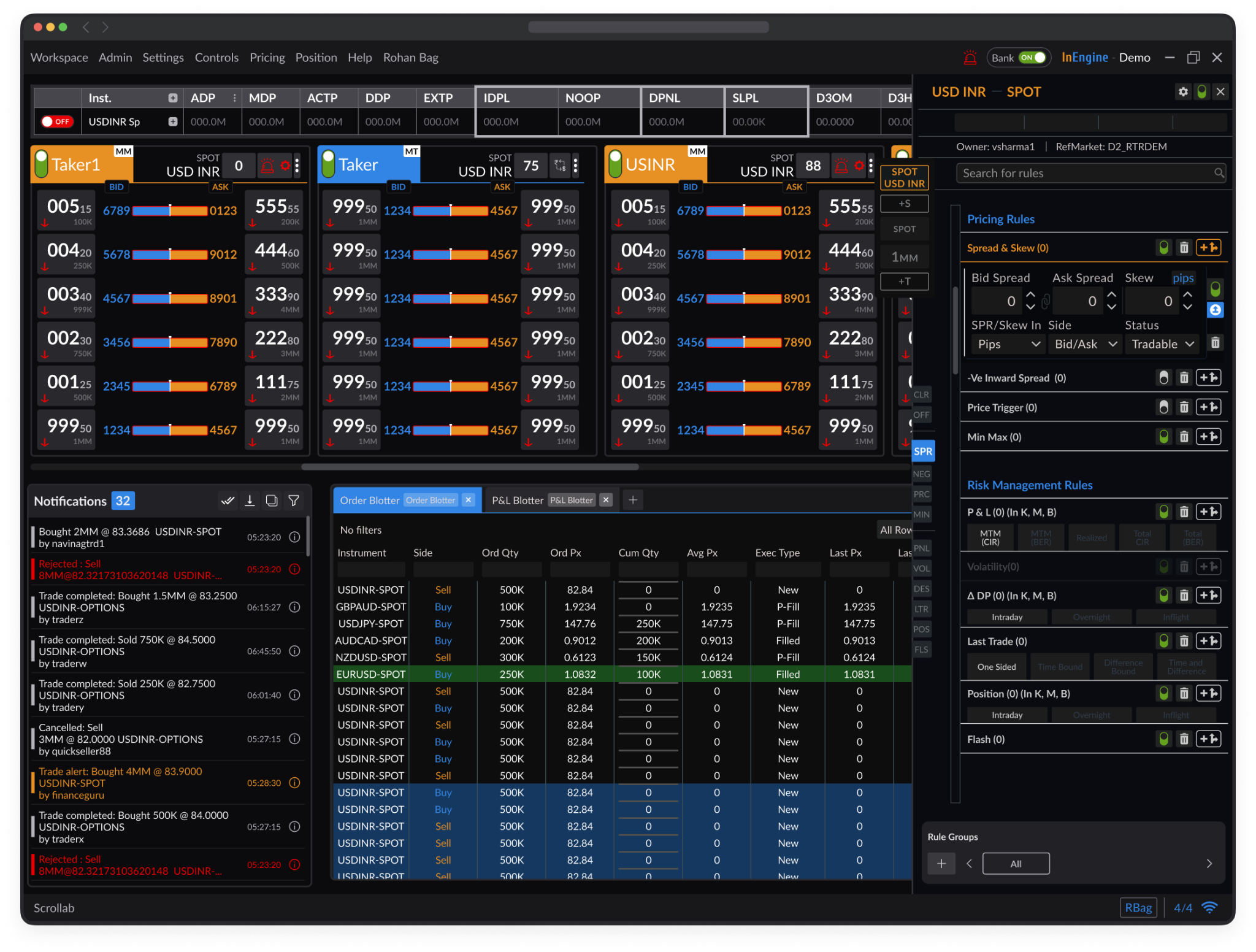
Rules and controls became easier to scan before taking action.
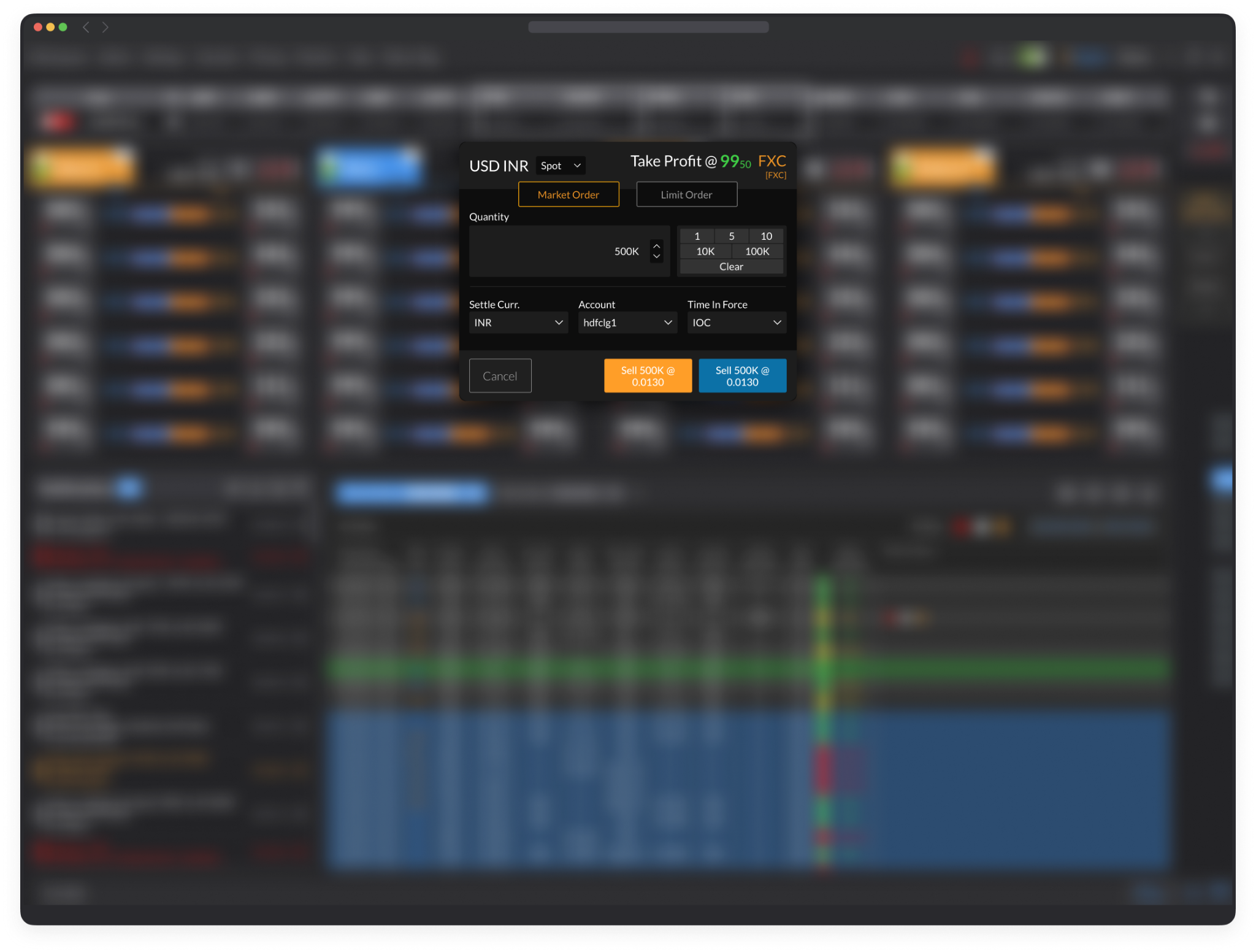
The order entry modal keeps the trade action focused, with quantity, account, time-in-force, and final buy/sell actions visible in one compact task flow.
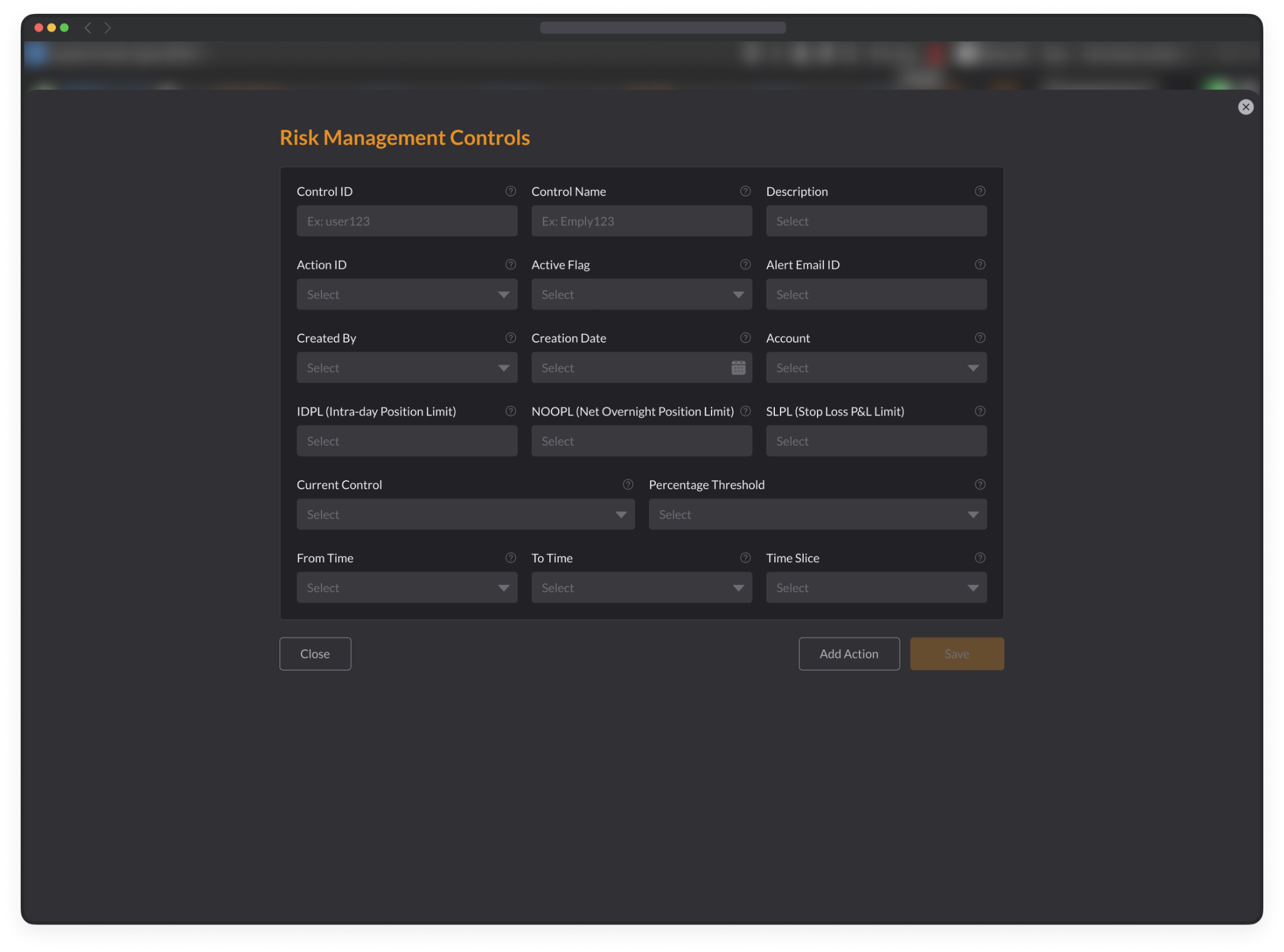
The rules experience was reorganized around scannable groups, clear expansion states, and visible on/off behavior.
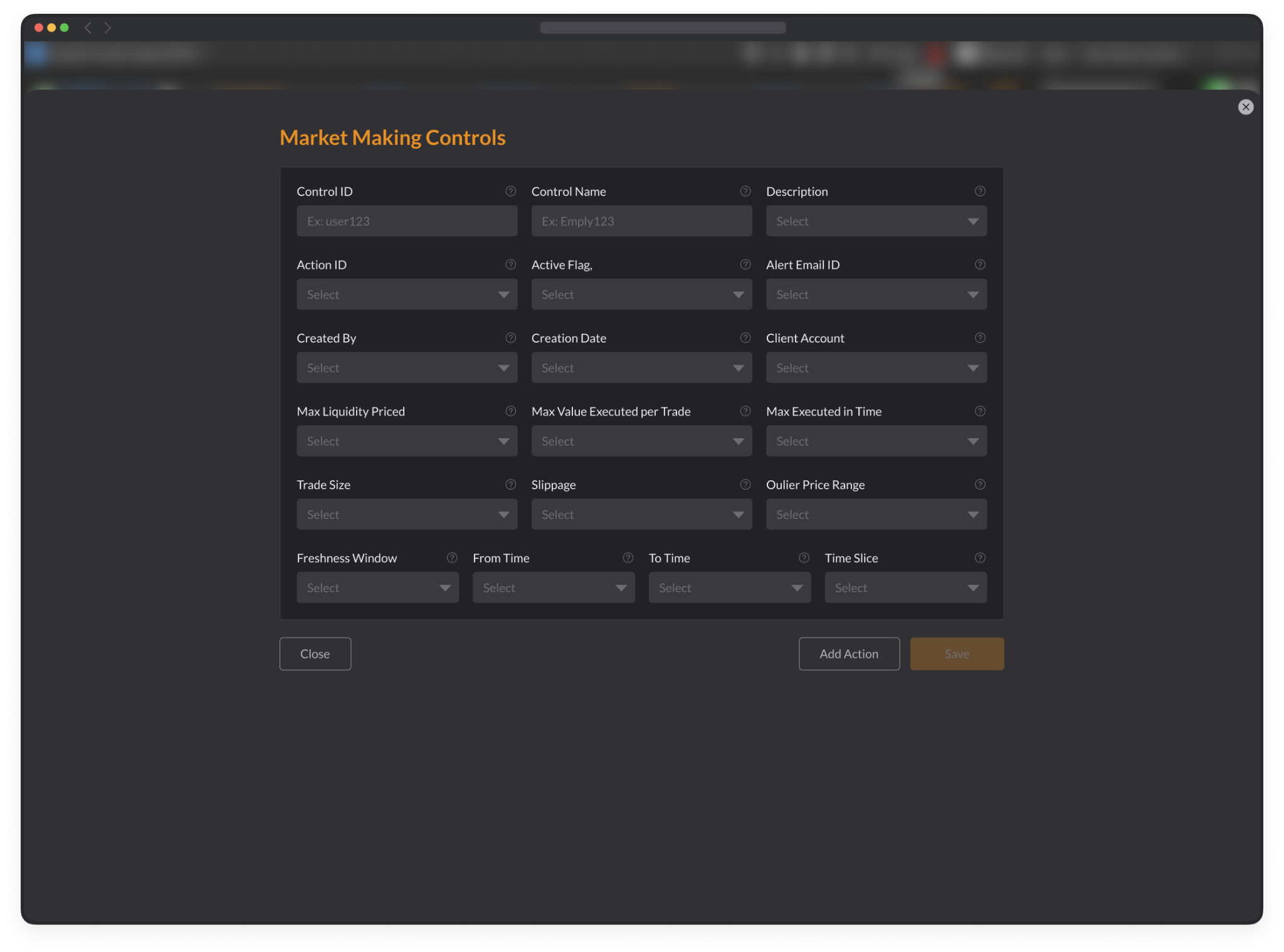
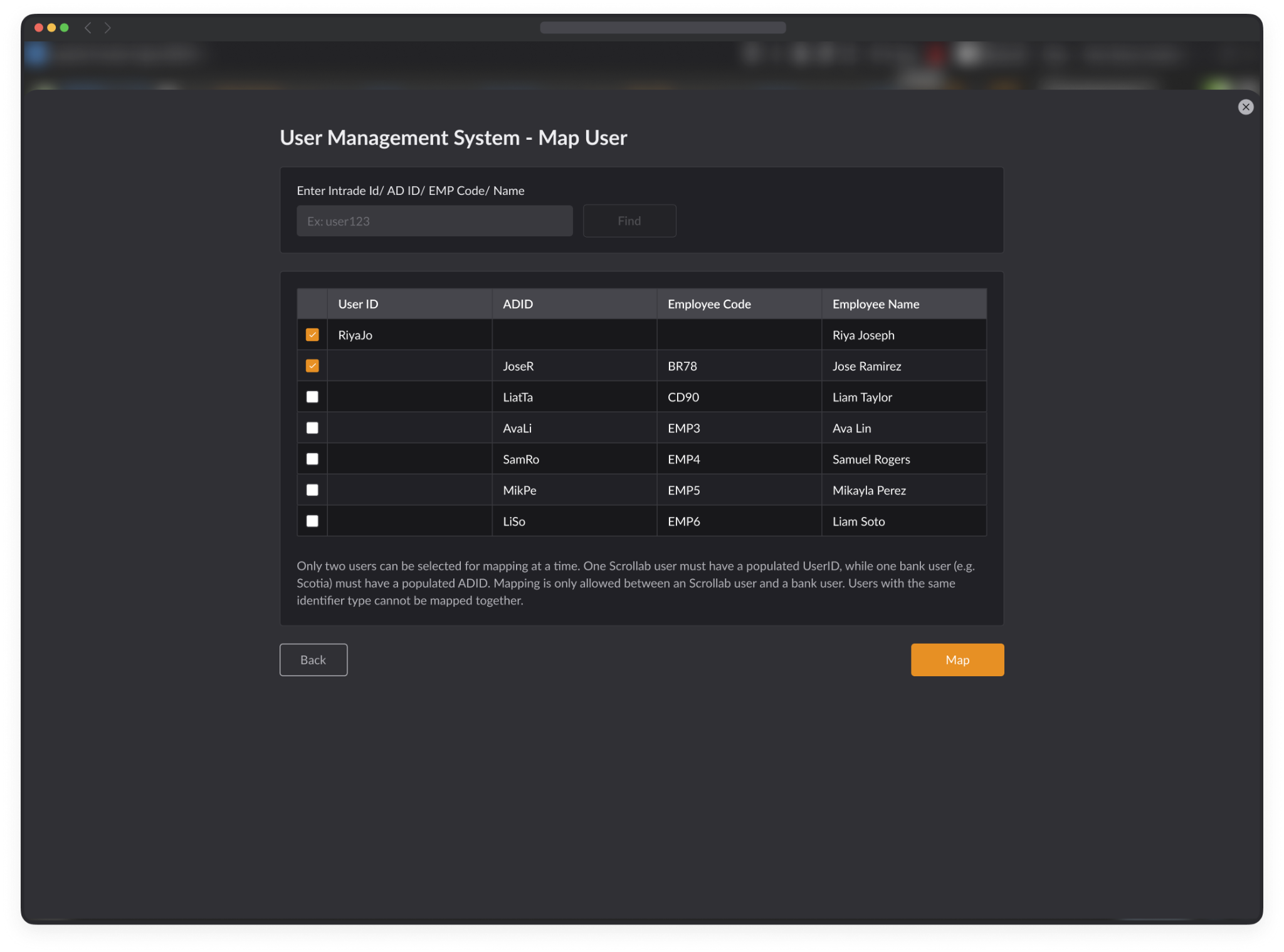
User creation, mapping, and checker workflows were simplified into repeatable steps so admins could understand dependencies faster.
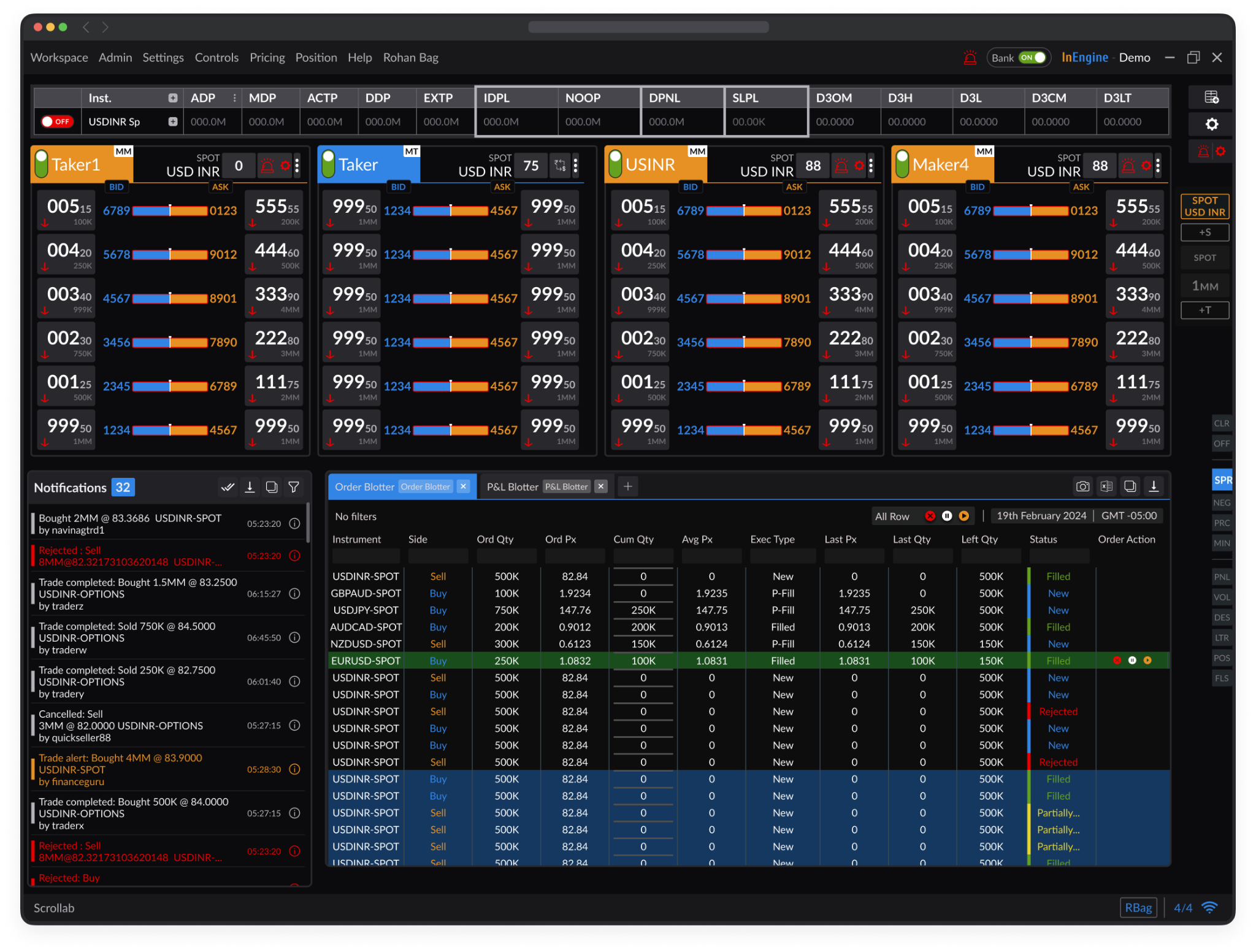
Each tile keeps the highest-value market signal visible first, then pushes secondary controls into a quieter supporting layer.
Shows aggregated buy and sell liquidity by price level, helping traders read depth without jumping into another view.
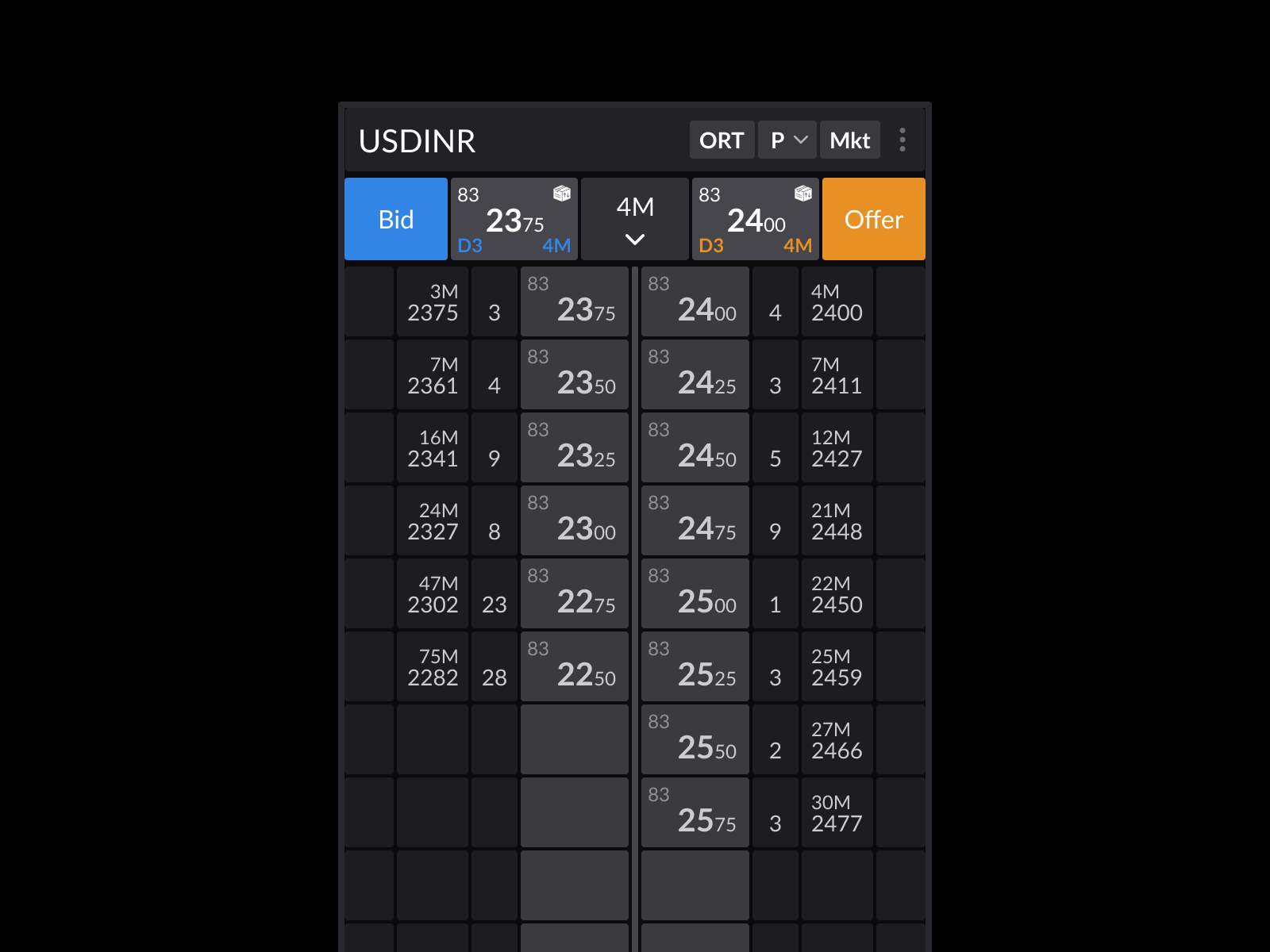
Designed for quote creation and market making, with bid/ask pricing, volume, spread context, and quick status visibility.
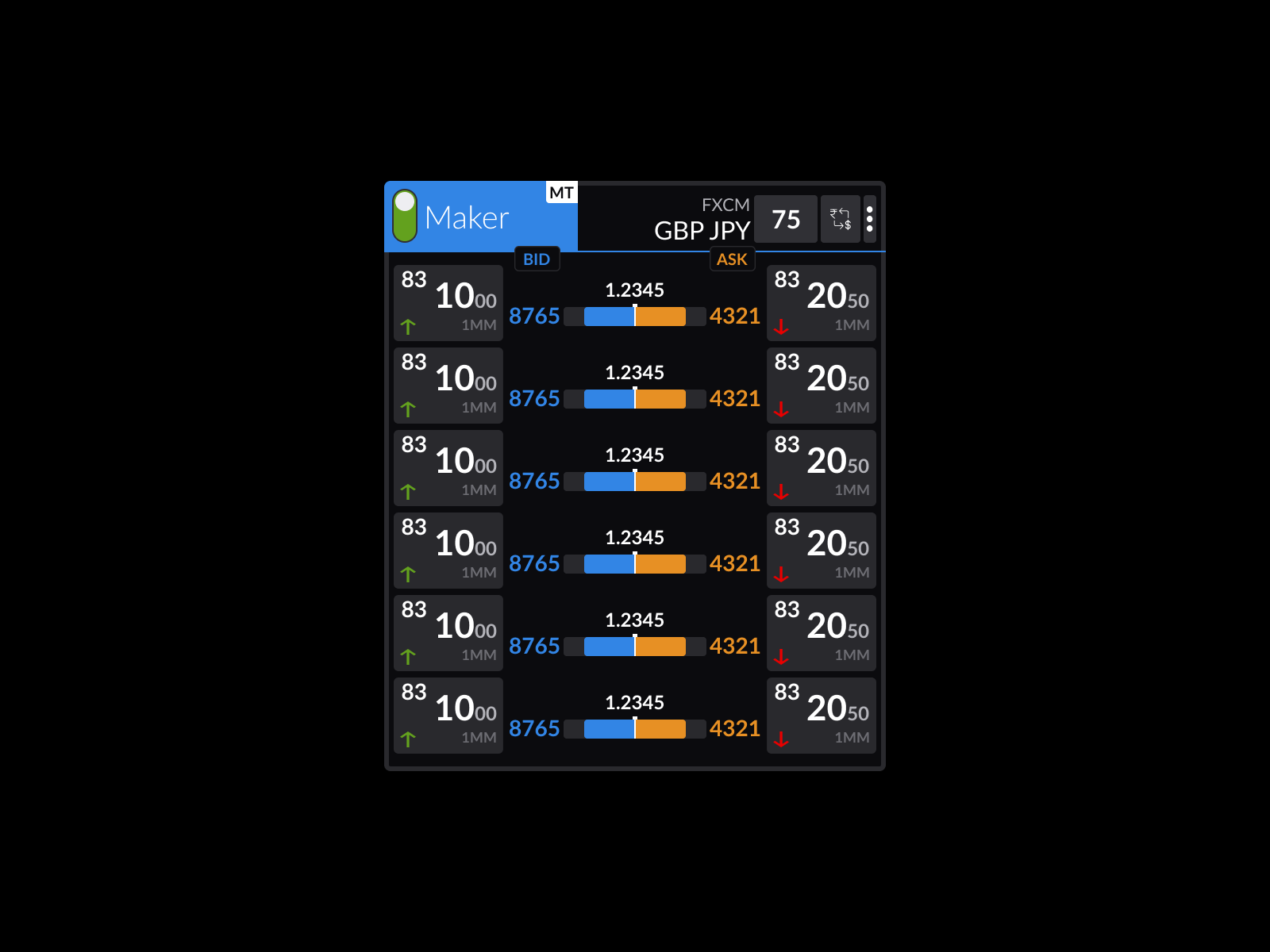
Optimized for consuming available liquidity quickly, keeping execution-focused controls closer to the user’s decision path.
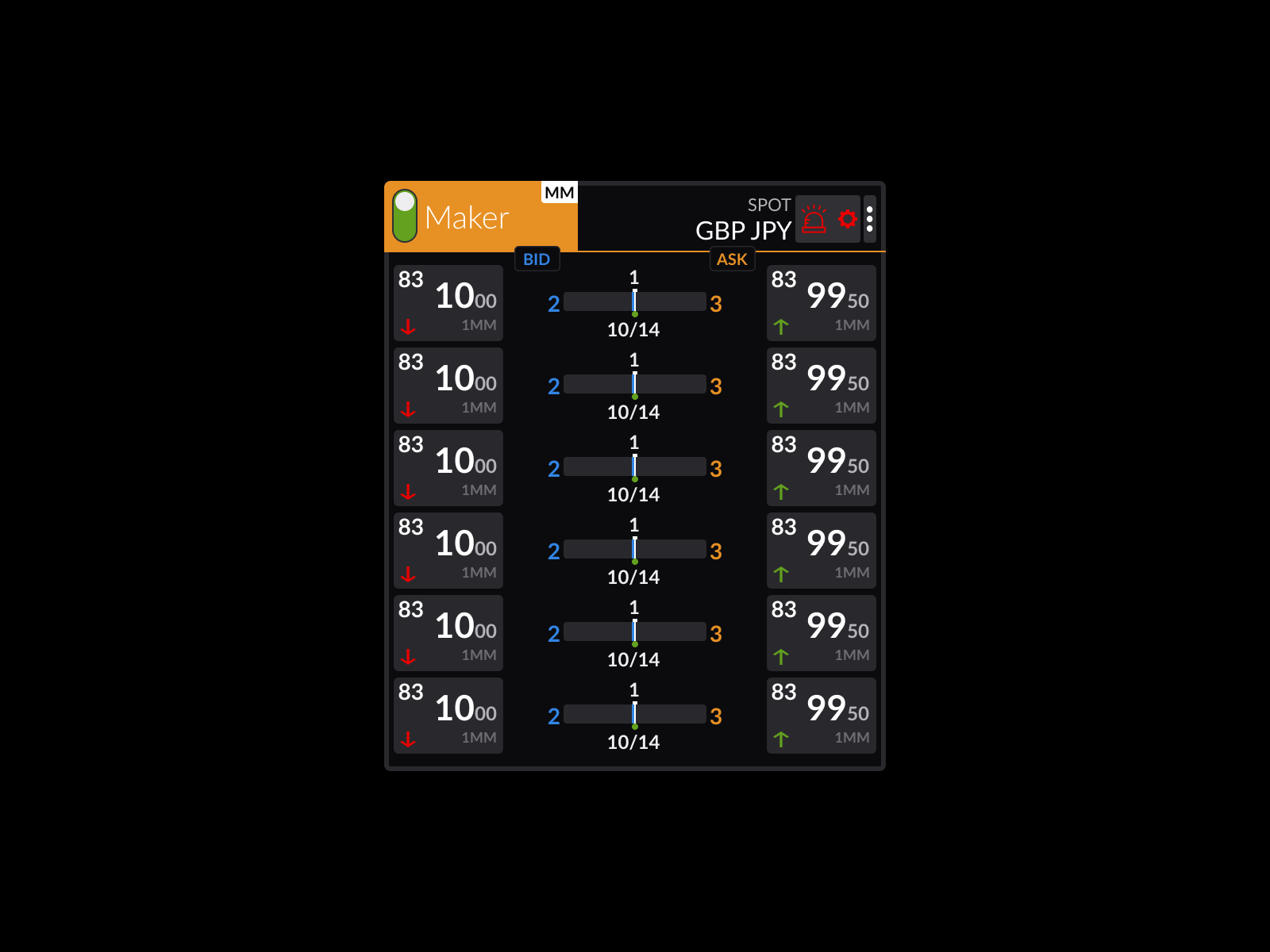
Formal analytics were limited, so I framed impact through operational improvements observed during product reviews, demos, and stakeholder walkthroughs.